Showing posts with label Wind energy. Show all posts

Saturday, June 26, 2010

Using Solar and Nuclear Energy Won't Cut Our Oil Bill

A few days ago I heard a radio talk-show host say we should cut our dependence on foreign oil by using more wind, solar and nuclear power. While this is a popular notion, increasing our use of these sources will do extremely little to reduce our oil consumption.

Reason: Oil-fueled power plants generate less than 1% of U.S. electricity. Most of our power is produced from domestic fossil fuels like coal and natural gas.

According to the U.S. Energy Information Administration, in the 12 months ending March 2010, about 45% of our electricity came from coal, 23% from natural gas, 20% from nuclear plants, and 7% from hydroelectric sources.

Renewable sources like wind, solar, biomass and others contributed nearly 4% of our power.

So where does the oil we drill or import go?

Once again, the EIA to the rescue. In March 2010, finished gasoline accounted for 46% of our oil usage. The rest is used in the manufacture of diesel oil, jet fuel, heating fuel, asphalt, plastics, etc., etc.

Which means if we want to reduce our dependence on oil, we need to severely curtail our use of gasoline-powered cars.

Fuel cells, anyone?

Sunday, May 2, 2010

Area Taken Up by Wind Farms

Wind produces little of the U.S.'s power: 70,761 GWh in 2009, or 1.7% of all electricity generation. At the same time, wind farms seem to take up huge amounts of land. So I began wondering, if we were to aim for, say, making 50% of our electricity from wind, how much of our land area would that take up?

RenewableUK, a trade body for the UK wind and marine renewables industries, provides the answer. (There's no reason for me to believe that the UK's space requirements are different from ours.)

According to them,
To obtain 10% of our electricity from the wind would require ... 0.3% to 0.5% of the UK land area.
They go on to say that less than 1% of this area would be used for foundations and access roads and that the other 99% could still be used for farming. By comparison, they say, 1.5% of the UK land area is covered by roads and about 77% is used for agriculture.

Photo: National Renewable Energy Laboratory, Photographic Information Exchange.

Thursday, December 17, 2009

How Much Solar and Wind Power Could You Produce in Your Backyard?

The blue rectangle on the roof of the building left of center is a drawing of the solar array.
Have you ever idly mused about the amount of renewable electricity you could produce in your backyard?

Muse no more.

The National Renewable Energy Laboratory has created a nifty map-based tool called "In My Backyard" or IMBY (get it?) that enables you to measure how much solar and wind power you could generate at home.

To use it, type your address into the tool. Doing so brings up a Google Maps satellite image of your house.

Next, select the kind of power you want. If you choose solar power, the tool asks you to draw your solar array. Then it tells you things like how many kilowatts your array will generate, what your rebate and tax credit will be, your payback period and other information.

You can even compare your solar power generation with your existing power consumption.

If you select wind energy, the tool asks you to draw the location of each turbine on your property. Then it may or may not give you energy production data, because it doesn't have wind energy information for all locations.

Try it out.

Wednesday, December 16, 2009

West Virginia Wind Farm Halted by Judge

In October, we reported on the proposed wind farm in West Virginia that was the subject of a lawsuit because of its potential to harm endangered Indiana bats.

A federal judge in Maryland ruled in favor of the plaintiffs, halting construction of the farm until the developers obtained a special permit known as an "incidental take permit."

An incidental take permit allows, as the name suggests, the "incidental take" of endangered species when a non-Federal entity is conducting lawful activities. The Endangered Species Act defines "take" as "harass, harm, pursue, hunt, shoot, wound, kill, trap, capture, or collect."

The ruling is not expected to affect other wind projects around the country.

Wednesday, December 2, 2009

Batteries to Store Wind Power in California

More news from the energy-storage front. I tell you, this sector is hopping!

The Modesto Bee reports that Primus Power Corp. in Alameda, Calif., recently won a $14 million federal grant to develop batteries that will store 25 megawatts of green electricity. The Modesto, Calif., Irrigation District's wind energy will send juice to the batteries, and the stored energy will be sold during periods of peak demand.

Doing so will displace some of the power generated from natural gas.

The Modesto Irrigation District provides electricity, irrigation and surface water treatment to parts of California's Central Valley. It wants to get 20% of its power from renewable sources by 2017, according to the Bee. The District will take part in a 5-year demonstration of the batteries at no cost to its ratepayers.

Saturday, November 28, 2009

California Might Use Compressed Air to Generate Electricity

Wind farms produce more than enough electricity at night -- when demand is lowest. One option for storing the excess energy is to capture the resource that generates it. In effect, to bottle the wind.

Or cram it into caves.

Which is what Pacific Gas & Electricity would like to do. The utility just received a $25 million award from money set aside in stimulus funds for smart-grid projects. The award will help pay for a study to find out if California can pack away pressurized air in underground caverns.

Here's how a compressed-air power plant would work. At night, wind turbines would force air into porous rock in Kern County, Calif. In the morning, the compressed air would be released to rotate turbines, which would generate up to 300 MW of electricity.

The generating plant will cost about $365 million. According to CleanTechnica, building a fossil-fuel plant that supplies the same amount of energy would come to $850 million.

Friday, November 6, 2009

Stimulus Funds Should Not Pay for Jobs in China, Senator Says

Senator Charles Schumer (D-N.Y.) wants none of our stimulus dollars to pay for jobs in China, according to Bloomberg News.

He will send Energy Secretary Steven Chu a letter urging him to release stimulus funds for a Texas wind farm project only if the high-value components, including the wind turbines, are made domestically.

At issue is a proposed 600-megawatt wind farm that is being jointly developed by American and Chinese companies. The wind turbines for the farm will be made in China, leading to the creation of about 3,000 jobs there.

Some of the investment for the farm is coming from China, and perhaps about $450 million from U.S. stimulus funds. Unless the Obama Administration denies the project the money.

The Energy Department says that to date, the project has not applied for funds.

The Alliance for American Manufacturing asks, "Why aren't American firms building this clean-energy project?"

Why indeed?

Friday, October 23, 2009

Wind Turbines in W. Va. Face Lawsuit Over Danger to Indiana Bats

A wind farm project in Greenbrier County, W. Va., is in federal court because opponents, including a local caving enthusiast and the Animal Welfare Institute, sued the developers of the wind farm under the Endangered Species Act.

The lawsuit is the nation's first court challenge to a wind farm under the Endangered Species Act. Plaintiffs are suing on the grounds that the wind turbines will harm the Indiana bat, which spends the spring and summer in forests and migrates to caves to hibernate in the fall. The caves are near the wind farm, and the plaintiffs say the bats are likely to fly into the 389-foot wind turbine blades.

The Indiana bat has been on the endangered species list since 1967.

Wildlife experts and wind power producers have known for several years that wind turbines cause bats to die. In 2008, researchers determined that the deaths occur mainly due to internal hemorrhaging as the reduced air pressure near the turbine blades leads to internal trauma in bats' light and delicate bodies.

In this blog, I've written about bats dying mysteriously because of white-nose syndrome, a mysterious fungus that appears on their faces and wings. That disease is still not understood.

Poor little bats. Their world is under so much stress.

Thursday, October 1, 2009

World's 10 Largest Renewable Energy Projects

From Scientific American, a slideshow of the world's 10 largest renewable energy projects.

The world is going to need 2 TW (terawatts, or million megawatts) of electricity in the next 40 years. The projects shown in this slideshow are producing electricity right now. They are:
  1. Horse Hollow Wind Energy Center, Taylor and Nolan Counties, Texas (currently overtaken by the Roscoe Wind Complex 220 miles west of Dallas)
  2. Lynn and Inner Dowsing Wind Farm near Skegness, Lincolnshire, England (now in second place behind the Horns Rev 2 project off Denmark)
  3. Rance Tidal Barrage in Bretagne, France
  4. SeaGen Turbine in Strangford Lough, Ireland
  5. Solar Energy Generating Systems in Southern California
  6. Olmedilla Photovoltaic Park in Olmedilla de Alarcón, Spain
  7. The Geysers in Sonoma and Lake Counties, Calif.
  8. Oy Alholmens Kraft in Pietarsaari, Finland (dry biomass-fired power plant)
  9. Aguçadoura Wave Farm near Póvoa de Varzim, Portugal
  10. China's Three Gorges Dam
  11. (Bonus) Puente Hills in Whittier, Calif. (landfill gas recuperation plant)

Thursday, July 16, 2009

600-Mile California Renewable Energy Transmission Line Canceled

The Transmission Agency of Northern California (TANC) has dropped plans to build a 600-mile transmission line from northern California to the Sacramento area. Three of the largest utilities backing the project had pulled out earlier this month, causing TANC to cancel all development plans.

The line would have carried energy from renewable sources like solar, wind and geothermal systems.

As we reported earlier, several communities along the transmission corridor had opposed the line's installation.

Friday, June 12, 2009

Batteries are Big

I've written about batteries and energy storage a few times on this blog. Batteries are key to ensuring the future of renewable energy. Without reliable high-capacity batteries, wind and solar energy will always be adjuncts to electricity derived from fossil fuels.

It seems Warren Buffet believes in the importance of batteries, too. At his urging, MidAmerican Energy Holdings, a utility holding company that Berkshire Hathaway owns 80% of, recently invested in BYD. BYD is a Chinese company that makes batteries and electric cars.

Not just any batteries. Batteries that can store 2 MW. And if they test well, they could lead to systems that can store 100 to 200 MW.

That's utility scale, and a game-changer.

Tuesday, June 9, 2009

National Top 50 Green Power Partners

The EPA has released the April 2009 edition of its quarterly list of the top 50 green power purchasers in its Green Power Partnership. The partnership, according to its website, "supports the organizational procurement of green power" by the nation's leading organizations. These organizations include corporations, governments, and educational institutions.

Organizations can meet the EPA's green power purchasing requirements by buying any combination of renewable energy certificates, on-site generation, and utility green power products.

So, which company bought the most green power in 2008? Intel, with 1.2 TWh of green energy. Pepsi wasn't far behind, with about 1.1 TWh.

Wind energy was the most common source of green power. Of the top 50 organizations, only 5 did not show wind as one of their green power sources. Another 4 got their green power from "Various" sources, which may or may not include wind energy.

Not surprising, given the rocketing expansion of wind power generation.

What about solar power? 13 organizations list it as one of their green power resources (again, not counting those that said "Various").

Wind energy has eclipsed solar as the renewable-energy resource of choice.

Sunday, May 24, 2009

Green Energy Does Not Bode Well for All Sectors of the Economy

From the Dallas Morning News, a story about how Texas will fare as green energy sources assume more prominence in our nation's grid.

The short answer: Not well.

Texas's dominance in wind power notwithstanding, the state relies heavily on fossil-fuel jobs. According to the story (emphasis mine):
In 2008, the oil and gas industry contributed 16.5 percent of Texas' gross state product and employed 367,967 people, or 3.52 percent of the state's nonfarm jobs, according to the Texas Comptroller of Public Accounts. The renewable industry, according to data from 2007, employed about 18,427 people.
OK, so the jobs relationship isn't quite valid, because it compares 2008 numbers to 2007. And renewable-energy employment grew like crazy in 2008, especially in wind energy, where jobs rose 70%.

So let's be generous and say Texas renewable-energy jobs grew 100% in 2008. That would put the employment number at 36,854 instead of 18,427. That's still just 10% of oil and gas jobs.

It's going to be a long time before all those fossil-fuel jobs get replaced by ones in renewable energy. If they ever do.

Also, let's not forget cap-and-trade, which would force sources of greenhouse gases to buy carbon credits. Texas ranks number 1 for greenhouse gas emissions.

The outlook isn't too rosy right now. But new technologies and policies usually hurt some while helping others. It's the price of progress. In the long term, on a macro scale, everyone mostly benefits.

Thursday, May 21, 2009

Clean Electricity Needs Power Lines, Just Like Fossil-Fuel Electricity

The electricity may come from a futuristic source, but transmitting it still depends on a 100-year-old technology: Put up tall towers and string lines between them.

And as new sources of electricity come on line, new transmission lines are going up or being planned. Which has several citizens steamed.

The Transmission Agency of Northern California (TANC) is planning to build a new 600-mile, 500 kV transmission line to bring solar, wind and geothermal energy from northeastern California to the Sacramento area. Some residents of Winters, Calif., about 30 miles west of Sacramento, have learned the power lines will run right next to their homes.

Utilities must build the new lines because the government may soon require them to get a third of their power from renewable sources by 2020, and the existing lines can't handle the extra power. Siting the new towers next to current ones would compromise security, so TANC is investing $1.5 billion in the new route.

A NIMBY sentiment has taken hold in several communities along the proposed course. While everyone's in favor of clean energy, they also want a clean environment. One that doesn't feature massive masts on their land.

Some residents are asking why the government doesn't put resources into smaller solar power projects that could serve nearby towns.

But utilities and energy experts say the erection of new power lines is inevitable. As a member of the California Energy Commission said, "If we are going to have to move away from fossil fuels, we are going to have build some transmission lines."

Tuesday, May 19, 2009

Land of the Rising Sun Prefers Solar Power

Wind power generates about 9 times as much electricity worldwide as does solar.

Except in Japan, says a news report in Asahi.com.

The Land of the Rising Sun has settled on solar power as the nation's main source of alternative energy. By 2030, the government expects solar power generatiing capacity to reach 53 GW.

In contrast, total capacity for wind energy will top out at 6.6 GW.

Japan's 9 electric utilities, each of which operates its own grid, have been reluctant to accept power from wind farm operators. Fluctuations in wind power reduce the quality of grid electricity and disrupt the networks' load balance, according to utility officials.

At least one utility agreed to accept wind power if it was stabilized by batteries before reaching the grid. It found no takers, because adding batteries can nearly double a wind farm's construction cost.

Construction of wind farms has stalled, says the news report.

Saturday, May 2, 2009

Renewable Energy Map from NRDC

The Natural Resources Defense Council has put up an interactive map showing the renewable energy potential of different regions of the country, as well as existing wind, biofuel and biodigester facilities.

The map is color-coded by areas of high and low potential. You can search for projects by state, county and ZIP code.

It's amazing what you can learn through this map. I discovered, for example, that my state of Connecticut has moderate potential for wind energy, and there is at present only one wind-energy project planned in the state. It will be in Windham county, appropriately enough, and is expected to generate 50MW of power.

According to the map, construction starts in 2050. That's probably an estimate, not a commitment, because the company that proposed the project plans to market it to wind energy developers.

So what's going on in your state?

Wednesday, April 29, 2009

Some New Power Lines May Be Approved by Feds, Not States

The best renewable energy sources are located in the western part of the U.S. But the great energy hogs are in the Northeast. And therein lies a problem.

One solution to this problem is long-distance power lines.

President Obama knows this. He wants the U.S. to build 3,000 miles of new transmission lines by 2012. The economic stimulus legislation he signed includes $11 billion toward the price tag for doing the job.

Laying out the money is one thing; putting up the lines is another. During their journey east, the power lines will have to traverse many states. Each state has its own way of planning for and certifying electricity infrastructure. This creates roadblocks for multi-state projects.

Proposed legislation would give the Federal Energy Regulatory Commission the authority to approve certain kinds of power lines of 345 kv or more. The legislation would get rid of state bottlenecks and improve availability of energy from wind and solar power plants.

Wonder how the states feel about this.

Saturday, April 25, 2009

Solar and wind need fossil-fuel backup, say noted authors

Wind and solar power are available only part of the time, and hence need 100% backup by other forms of generation to ensure against blackouts. So say James Schlesinger and Robert L. Hirsch in a recent article in the Washington Post.

In today's world, the authors write, a 100% backup can only come from fossil fuels. Then they reason that this means consumers will have to pay a premium for wind and solar -- once for the renewable energy, and a second time for the conventional power plant that must be kept on standby at all times.

The article makes other points, but that's the crux of its argument.

While their case sounds convincing, it ignores the larger picture.

Our capabilities in wind and solar power generation, and electricity storage (pdf), are still evolving. At present, renewable energy is an adjunct to conventionally-derived power.

But it is nibbling into the demand for fossil fuels. In the long term, those nibbles will grow into bites. When those bites cause the need for oil and natural gas to drop by double digits, fossil fuel prices will plummet.

If we abandon renewable energy now, we will always be dependent on hydrocarbon fuels.

World oil production, according to several estimates, will peak between 2010 and 2020. Say we stop investing in wind, solar, biofuels, geothermal, and other renewable energy sources. What happens in 2030? 2050?

OK, that may sound overly pessimistic. Predictions of doom have a way of not panning out.

But here's the key: they don't pan out because because we are blessed with people who see beyond the horizon and take action. They're the ones who prevent doomsdays.

Doomsdays like running out of oil and sitting in the dark.

The authors of the Washington Post article conclude by saying, "Some serious realism in energy planning is needed, preferably from analysts who are not backing one horse or another."

Done.

Tuesday, April 21, 2009

Wind energy grows from a zephyr to a gale

"I hear the wind among the trees
Playing celestial symphonies"
-Longfellow

The symphonies the wind plays these days are opuses of power, jobs, and growth. In 2004, less than 2% of new electricity generating capacity came from wind power. Just 4 years later, that number had risen to 42%.

Jobs grew along with installed capacity. At the end of 2007, the wind energy sector employed about 50,000 workers. Twelve months later, the figure had soared 70%, to 85,000.

And the trend will only continue. Total installed capacity is expected to grow by 20% this year, or another 5 GW. The U.S. Department of Energy estimates that by 2030, fully 20% of the nation's electricity will be generated by wind turbines.

In other words, 1 in every 5 watts flowing through transmission lines will owe its birth to the wind.

The answer is, indeed, blowin' in the wind.

Thursday, April 16, 2009

Texas far ahead in wind energy

Texas' wind energy-generating capacity reached 7.118 GW in 1998, reports the American Wind Energy Association. Wind accounts for 10% of the state's electricity generating capacity.

Iowa came in at a distant second, with 2.791 GW of installed capacity.

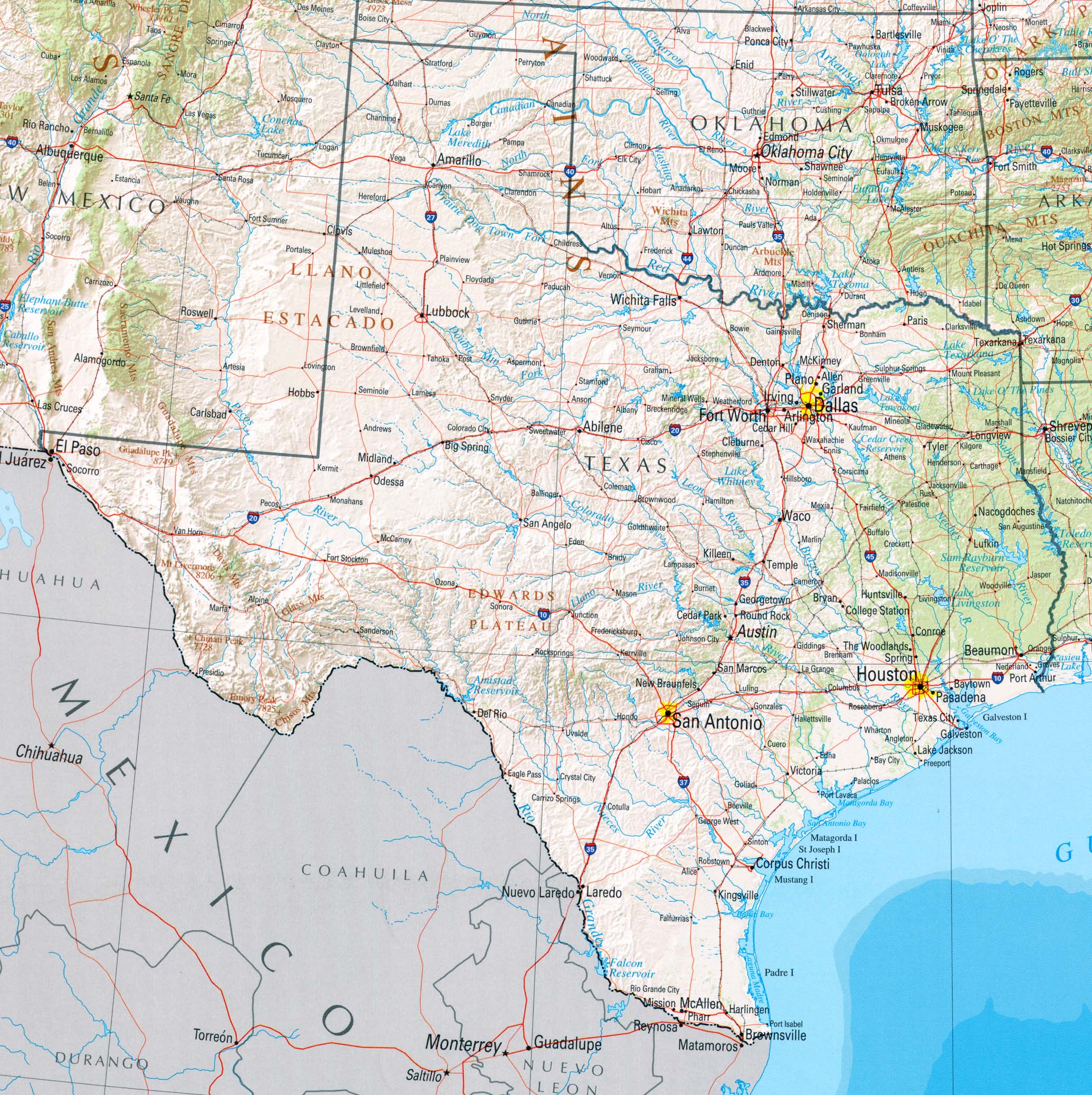
A major hurdle to continued expansion is the lack of sufficient long-distance transmission lines. Most of the wind farms are located in West Texas and the Panhandle, far away from the energy-hungry metros like Dallas and Houston.

The Texas Public Utility Commission estimates that 2,400 miles of power lines will have to be built to meet electricity demand, at a cost of $5 billion. The money will come from monthly surcharges on consumers' electric bills.

One problem with relying too much on wind energy: the wind isn't constant. On hot summer afternoons, when power consumption is at its peak, the West Texas wind dies down, idling the massive turbine blades.

Paul Sadler, executive director of Austin-based The Wind Coalition, longs for a big breakthrough in electricity storage technology. When that happens, he says, energy generation will be "truly transformed."

After Texas and Iowa, the next three states with the highest wind energy capacity at the end of 2008 were California (2.517 GW), Minnesota (1.754 GW) and Washington (1.447 GW).
 
Copyright 2009- each blog post's respective author. All rights reserved.